
As of October 18, 2026, your birth chart still says the same thing it said the day you were born. It maps where the Sun, Moon, and planets sat in the sky at your exact birth time and place. What does my birth chart say about me? It describes recurring psychological patterns, the themes you circle back to, and the parts of yourself you may have learned to hide.
What Does My Birth Chart Say About Me?
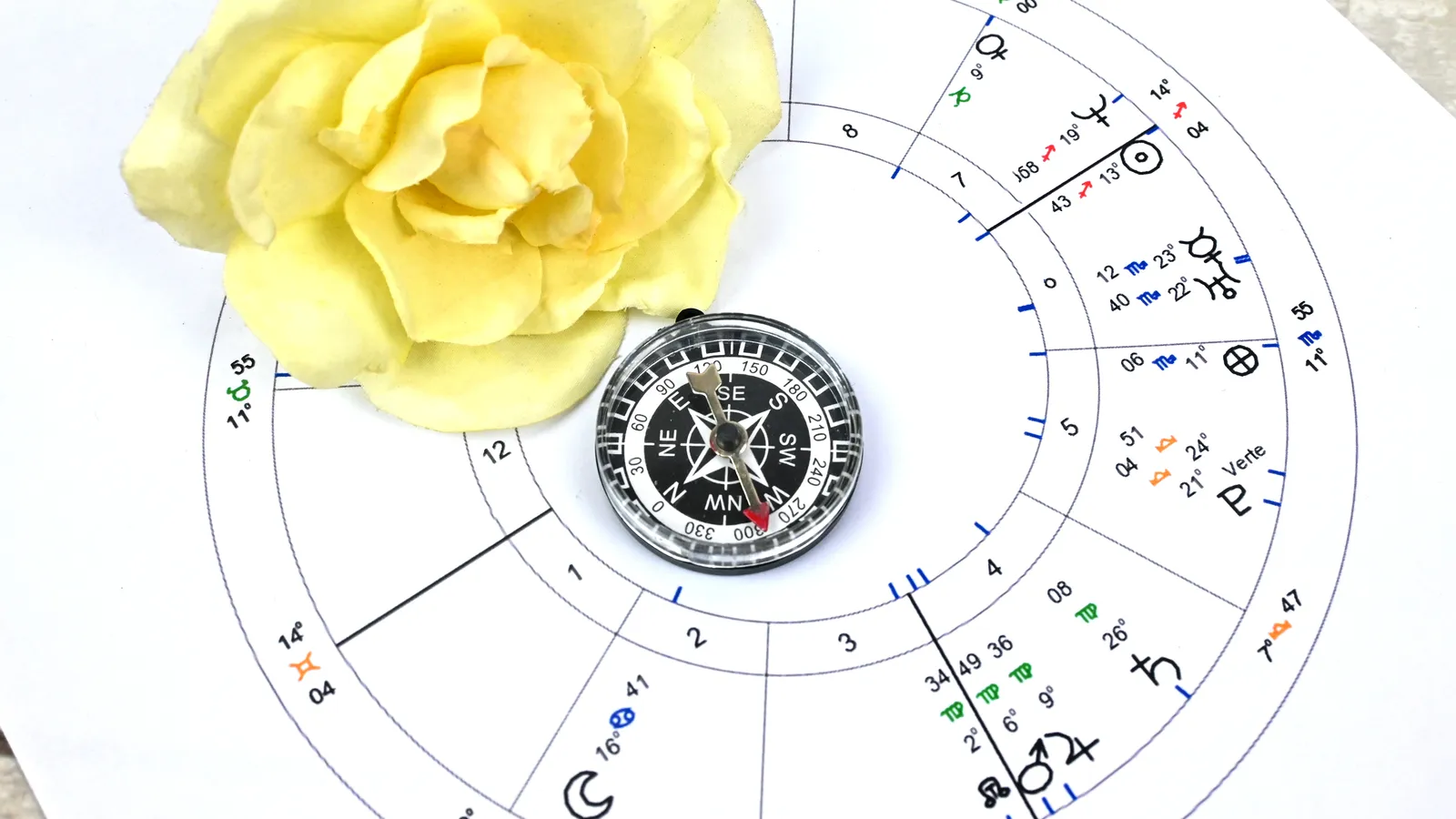
A birth chart, also called a natal chart, is a snapshot of planetary positions at your birth moment, organized into twelve houses that represent life areas. It is not a prediction machine or a personality quiz result. It is closer to a weather map of your inner life, showing pressure systems that formed early and still shape how you react now.
The chart will not tell you your job title or your soulmate’s name. It can show why certain emotional weather returns, like a 4th house Moon that keeps pulling you back toward old family roles, or a 10th house Saturn that makes public recognition feel earned only through struggle. These are patterns, not verdicts.
How Is a Personality Pattern Actually Read in a Chart?
Reading a chart means looking at relationships between planets, not isolated traits. One placement rarely explains a whole behavior; it is the combination that matters.
Personality by birth chart works through layers. The Sun shows core identity and will. The Moon shows emotional instinct and what feels safe. Rising sign shows the posture you lead with in unfamiliar rooms. A full birth chart interpretation reads these together, the way a therapist reads a client’s history rather than a single sentence out of context.
Aspects, the angles planets form to each other, add tension or ease. A square between Mercury and Mars might show a mind that argues before it thinks. A trine between Venus and Jupiter might show someone who makes connection look effortless, at least on the surface. None of these are fixed sentences; they are tendencies worth noticing.

What Does Pluto in My Birth Chart Reveal?
Pluto in a birth chart points to where compulsion, power, and transformation live in a person’s life. Pluto moves slowly, spending over a decade in each sign, so its placement often says more about a generation than an individual on its own.
House placement matters more here. Pluto in the 8th house, its natural home, can intensify how someone handles intimacy, shared money, or control in close bonds. Pluto in the 2nd house can turn self-worth into something fought for rather than assumed. The planet does not cause destruction; it points at what a person tends to grip too tightly until it breaks open on its own terms.
This is where shadow work birth chart analysis becomes useful. Pluto’s placement often sits near the wound the chart is organized around protecting. Before asking how to change that pattern, it helps to ask what it has been guarding against all along.
What Does My Birth Chart Say About My Relationships?
Relationship patterns in a chart show up mainly through the 7th house of partnership, Venus, Mars, and any planets making hard aspects to them. These placements describe relational instincts, not compatibility scores with any specific person.
A 7th house Saturn can draw someone toward partners who feel distant or hard to reach, often repeating an early lesson about love needing to be earned. Venus square Pluto can create a pull toward intensity, even when calm is what is actually wanted. Neither placement is a life sentence; both describe a groove the psyche tends to fall into.
Venus moves through signs quickly, changing its texture about every three to four weeks. According to astro.com’s ephemeris data, Venus enters Sagittarius on January 7, 2027, then Capricorn on February 3, 2027, shifting the general romantic mood from expansive to more cautious and structured. These transits color the atmosphere; the natal placements set the deeper pattern underneath it.
For a closer look at the emotional layer specifically, the Moon sign guide breaks down how lunar placement shapes attachment style and what feels like home in another person.

When Do These Chart Patterns Tend to Shift?
Certain ages bring predictable pressure from slow-moving planets, mainly Saturn, Jupiter, Uranus, and Chiron. These windows do not force change; they tend to make old patterns harder to ignore.
Saturn’s cycle is the clearest example. Saturn squares natal Saturn, which happens around ages 7, 21 to 22, 36 to 37, and 51 to 52, often marking a tightening, a sense that old structures need rebuilding. The Saturn return, around ages 27 to 30 and again near 57 to 60, tends to ask what has actually been built versus what was simply inherited.
| Approximate Age | Cycle | What It Tends to Ask |
|---|---|---|
| 7 | Saturn square natal Saturn | First taste of structure and limits |
| 14 to 15 | Saturn opposition natal Saturn | Testing authority and identity |
| 21 to 22 | Saturn square natal Saturn | Adult responsibility beginning |
| 27 to 30 | Saturn return | What has been built on your own terms |
| 36 to 37 | Saturn square natal Saturn | Reassessing commitments made in the twenties |
| 42 | Uranus opposition | Where freedom was traded for stability |
| 44 to 45 | Saturn opposition natal Saturn | Midlife reckoning with roles taken on |
| 50 | Chiron return | Returning to the original wound, with more capacity |
| 51 to 52 | Saturn square natal Saturn | Final restructuring before the second Saturn return |
| 57 to 60 | Second Saturn return | Harvest or reckoning with a life's structure |
Jupiter returns roughly every 11.9 years, offering a smaller, gentler checkpoint between Saturn’s harder lessons. When Saturn squares your natal Saturn, which happens around age 21 to 22 for most people, old plans often feel suddenly too small or too rigid to keep wearing.
Should I Rely on a Free Chart Reading or Look Deeper?
A free chart reading can name your Sun, Moon, and rising signs accurately within seconds. It rarely explains why a pattern keeps recurring, because that usually requires reading multiple placements together over time, not a single-sentence summary.
Free tools are a reasonable starting point. The free birth chart reading and natal chart reading free guides on this site explain what those instant readouts can and cannot tell you. They are a map’s edges, not its terrain.
Deeper pattern work asks different questions. It asks what a repeated relationship dynamic is protecting, what a career stall is shielding someone from, what a placement like Pluto in the 8th house has been guarding since early adulthood. That kind of reading lives in the pattern library, where placements are read as psychological habits rather than fixed fate.
What Does a Deeper Pattern Reading Actually Add?
A deeper reading connects placements across the whole chart rather than listing them one by one. It treats the Sun, Moon, Pluto, Saturn, and house rulers as parts of one ongoing story instead of separate paragraphs.
This is closer to how Iris Vane’s approach to shadow work works: asking what a pattern protects before asking how to change it. A 10th house Saturn paired with a 4th house Moon, for instance, might show someone who built a public role partly to outrun a shaky early home life. Naming that sequence tends to matter more than naming either placement alone.
None of this replaces a person’s own judgment about their life. A chart can describe a tendency; it cannot predict a specific outcome, diagnose a condition, or guarantee how a relationship or career will unfold. It offers language for patterns that often existed long before anyone had words for them.
Where Does This Leave Someone Asking What Their Chart Says?
The honest answer sits between two extremes. A chart is not meaningless noise, and it is not a script written in advance.
It works best as a mirror with structure, something that reflects a person’s habits back to them in a shape that is easier to examine. Starting from the homepage and working through placements one at a time, rather than trying to absorb a whole chart in one sitting, tends to make the patterns easier to actually see.
Quietly, the function of astrology is diagnostic rather than fortune-telling. As one astrologer put it, a chart “describes the weather, not the day’s events.” That distinction matters most when a pattern keeps repeating and the person inside it wants to understand why before deciding what to do next.
If a recurring pattern in your chart feels like it keeps writing the same scene with different people, The Pattern Reading goes further into what that specific placement has been protecting.
what does my astrology chart say about me?
It describes recurring psychological patterns rather than fixed facts about your life. Your chart maps where the planets sat at your birth moment, and placements like the Sun, Moon, and rising sign tend to show identity, emotional instinct, and the posture you lead with in new situations. Think of it as a mirror with structure, not a verdict on who you are.
what does my natal chart say about me?
A natal chart tends to describe the emotional and behavioral grooves you keep returning to, not a fixed script. Reading the Sun, Moon, and rising together usually matters more than any single placement, since personality tends to show up through combinations and aspects rather than isolated traits. It can offer language for old patterns, though it cannot predict specific outcomes.
what does my birth chart mean about me?
It tends to mean your chart is describing inner patterns formed early on, not announcing fixed traits or a destiny. The planetary positions at your birth moment often point to emotional habits, relational instincts, and places where old wounds quietly organize present behavior. Treat it as a map of tendencies worth noticing, something to sit with rather than a label to wear.