
An attachment style quiz is a short questionnaire that sorts your relationship habits into broad categories, usually secure, anxious, avoidant, or fearful avoidant. It can name a pattern you already sense, but it cannot explain why that pattern formed or what it still protects you from. As of October 6, 2026, these quizzes remain a popular first step for people trying to understand their attachment style, not a full diagnosis of it.
What Is an Attachment Style Quiz, and What Does It Actually Measure?
An attachment style quiz asks you to rate statements about closeness, trust, and conflict in relationships. Your answers get grouped into a category that researchers Mary Ainsworth and later John Bowlby first described in studies of infants and caregivers. The quiz is a mirror, not a verdict.
Most quizzes measure two underlying tendencies: how anxious you feel about abandonment, and how much you avoid emotional closeness. Where you land on those two scales produces one of four labels. That label describes a current pattern, not a permanent identity.
A quiz result can feel like relief, finally a word for something you have lived through many times. It can also feel like a trap, as if you are now sentenced to repeat it. Neither reaction is wrong. Both are worth sitting with before you decide what the result means for you.
Why Do We Keep Repeating the Same Relationship Pattern?
Repetition in relationships usually has a job to do. A pattern that looks self-defeating from the outside often began as a smart adaptation to an earlier, less safe environment.
If you learned young that closeness came with unpredictability, distancing yourself may have kept you steady. If you learned that attention had to be earned, chasing it may have felt like survival rather than choice. These strategies do not disappear just because the original danger has passed.
This is the core question behind most work on recurring patterns: what is the behavior protecting, before anyone asks how to change it. An anxious or avoidant style is rarely about the current partner at all. It is often an old answer still running in a new situation.

What Are the Four Attachment Styles, and How Do They Show Up?
Psychology generally describes four attachment styles, though people often show a blend rather than a pure type. Each style carries a different core fear and a different way of managing closeness. The table below lays out common traits in plain terms.
| Style | Common traits | Core fear | What the pattern may protect |
|---|---|---|---|
| Secure | Comfortable with closeness and separateness | Low chronic fear of abandonment | Trust built from consistent early care |
| Anxious | Seeks reassurance, reads into silence | Being left or forgotten | Vigilance earned through inconsistent attention |
| Avoidant | Values independence, pulls back under pressure | Loss of autonomy or being controlled | Self-reliance built when needs went unmet |
| Fearful-avoidant | Wants closeness, then retreats from it | Both abandonment and engulfment | Protection from relationships that once felt unsafe either way |
No style is a flaw to fix overnight. Each one formed for a reason, and each one can soften with steady, safe experience over time.
How Does Astrology Describe Attachment Patterns in the Birth Chart?
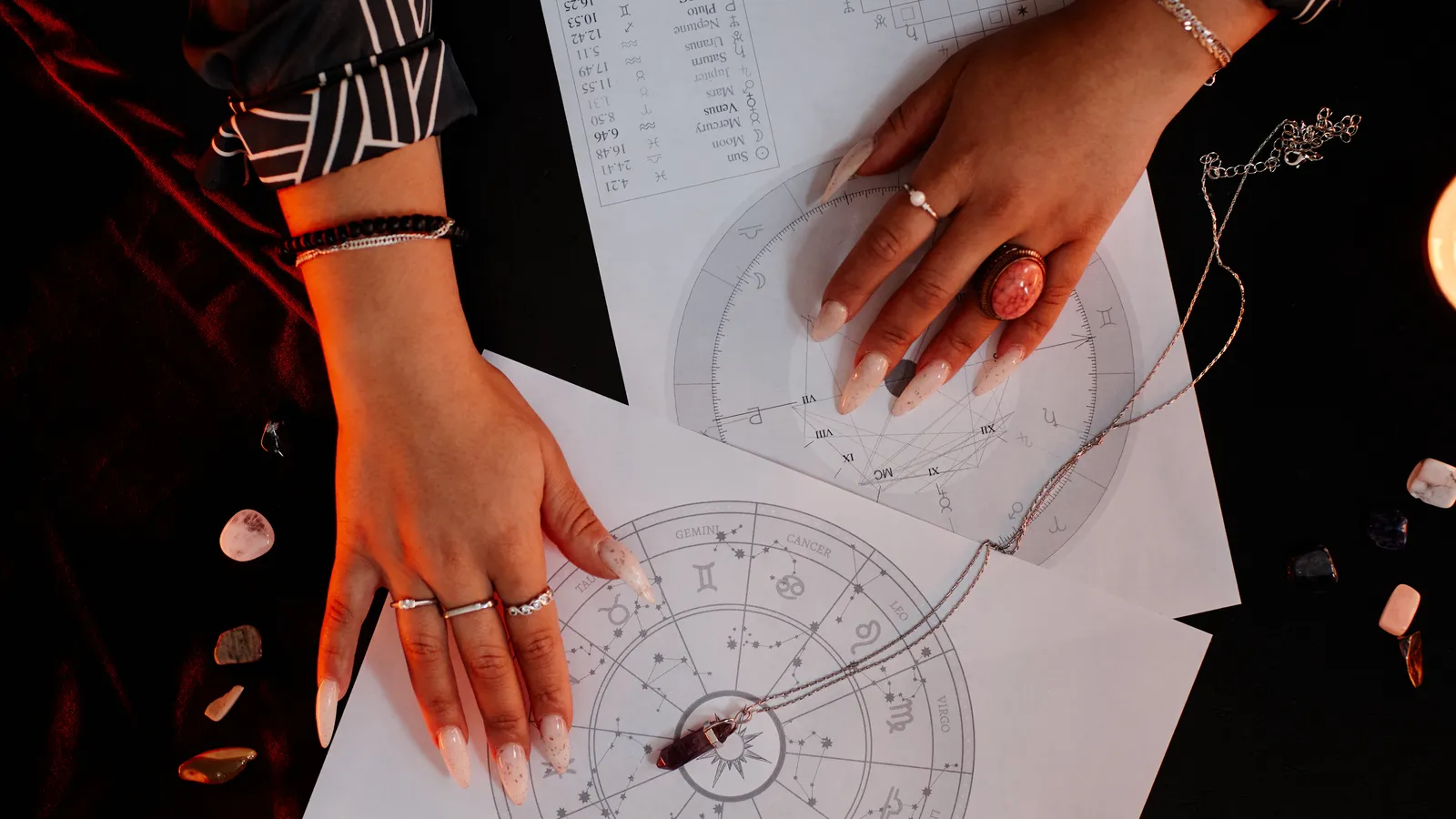
A natal chart is a map of where each planet sat in the sky at the moment and place of your birth. In astrology, houses are twelve life areas a chart divides into, each tied to a theme such as money, home, or partnership. Several placements speak directly to how you attach.
The Moon describes emotional needs and what felt safe in early caregiving. Venus describes how you receive and express affection. Saturn often marks where fear or self-protection took root, sometimes through early responsibility or scarcity.
House placement matters too. A crowded 4th house, the house of home and family, can point to early attachment lessons learned at the kitchen table. The 7th house of partnership shows how those lessons play out with a current partner, while the 8th house of shared resources often holds the deeper fear of merging too completely. I read these layers the way I read any chart, through Iris Vane’s approach of asking what a repeated pattern is guarding before asking how to loosen it.

When Do Attachment Patterns Tend to Shift or Soften?
Attachment patterns are not fixed at birth, and certain transits tend to coincide with periods when old habits get reexamined. A transit is simply the current position of a planet compared to where it sat in your birth chart. Timing does not guarantee change, but it often marks a season when change becomes more possible.
A Saturn return happens when transiting Saturn moves back over the exact degree it held at your birth, roughly every twenty nine and a half years, first between ages twenty seven and thirty. Many people report their relationship patterns coming up for honest review during this window. You can check exact planetary positions for any date on an ephemeris like astro.com.
A square is a ninety degree angle between two planets that tends to create pressure and friction toward change. Saturn squares its own natal position again around ages thirty six, forty three, and fifty, often reopening questions about boundaries and self-worth. An opposition happens when a planet sits directly across the chart from its natal placement, and Uranus does this near age forty two, often shaking loose habits that felt permanent.
A Chiron return occurs around age fifty, when transiting Chiron comes back to its birth position, often reopening old wounds in a way that allows for deeper healing. Smaller, shorter shifts show up too. Venus entering Scorpio on October 9, 2027 can intensify questions about trust and vulnerability for several weeks, while Venus entering Capricorn on February 4, 2027 often favors more guarded, careful affection.
These shorter Venus windows will not rewrite an attachment style on their own. They do tend to bring the pattern into sharper focus, which is often when a person first searches for a name for what they are feeling.
How Can You Use a Result Without Becoming the Label?
A label is most useful when it points you toward a moment you can observe. The aim is to notice the pattern while it happens, not to recite the category after the fact.
Consider a simple example. A person scores as anxious and notices they check their phone every few minutes after sending a message. Instead of scolding that habit, they might ask what the checking protects. Often the answer is a younger self who once waited for attention that did not come.
Someone who scores as avoidant might notice a familiar urge to cancel plans after a close weekend. The useful question is not “how do I stop this,” but “what felt dangerous about being that close?” Sometimes the answer is fear of being needed more than they can give.
A gentle practice is to write down three recent moments when the pattern appeared. Note the trigger, the feeling in your body, and what you did next. Over a few weeks, those notes usually reveal more than any single quiz score.
If you notice the pattern bringing serious distress, a licensed therapist can offer support that neither a quiz nor a chart can. Astrology works best as a companion to that kind of care, not a replacement for it.
Should You Trust a Quiz Result Over Your Own Reflection?
A quiz result is data, not a diagnosis, and it cannot replace your own lived sense of your relationships. Treat it as a starting conversation rather than a final answer about who you are.
The most useful approach usually combines three things: the quiz label, a look at relevant chart placements, and honest reflection on your actual relationship history. Where all three agree, you likely have a real pattern worth naming. Where they disagree, that gap is often more interesting than the label itself.
Attachment style work, like chart work, asks a patient question. As one researcher in the field put it, “early bonds shape later expectations” more than most people realize. The goal on Why Do I Keep Doing This is never to hand you a fixed identity, but to help you see the pattern clearly enough to meet it with more choice than before.
If you want a closer look at your own chart alongside these patterns, Iris offers readings by email.