Selected 2027 Venus and Mars sign changes relevant to relationship and action timing
| Date | Planet | Moves Into | Commonly Associated With |
|---|
| January 8, 2027 | Venus | Sagittarius | Desire for freedom in connection |
| February 22, 2027 | Mars | Leo | Bold, visible action |
| April 21, 2027 | Venus | Aries | Impulsive attraction, directness |
| July 16, 2027 | Mars | Libra | Conflict around fairness in partnership |
| October 9, 2027 | Venus | Scorpio | Intensity, emotional depth in bonds |
These five transits are not predictions. They mark windows where the emotional tone of relationships and action may shift, based on standard sign-ingress data. You can verify planetary movement dates directly through [NASA JPL's ephemeris tools](https://ssd.jpl.nasa.gov/), which track planetary positions with public, verifiable data.
If you are trying to understand why you repeat certain relationship choices regardless of timing, the [attachment style quiz breakdown](/patterns/attachment-style-quiz-explained) pairs well with chart work, since attachment patterns and Venus or moon placements often overlap.
## How Do I Read My Own Chart Without Getting Overwhelmed?
Start with three placements only: your sun, moon, and rising sign. These three carry the most weight and are the easiest to interpret without specialized training.
Next, look at your Saturn placement by house. Saturn shows where you feel the most pressure to perform, control, or prove yourself, often because of early conditioning rather than present reality.
Finally, notice any tight aspects, meaning planets within a few degrees of forming a square, opposition, or conjunction. These are the pressure points most likely to show up as repeating patterns in daily life, not abstract traits you read once and forget.
Chart reading is a skill, and it takes time before patterns start making intuitive sense. The goal is not mastery. It is recognition, slowly building a vocabulary for parts of yourself that previously had no name.
For a broader overview of how pattern work across astrology connects to the rest of this site, the [patterns section hub](/patterns) collects related pieces by theme. You can also read more about the approach behind this kind of reading on [Iris Vane's persona page](/about/iris-vane), or return to [the home page](/) for the full range of topics covered here.
A natal chart will not resolve your questions for you. It gives you a structure for asking better ones, and that structure tends to outlast any single reading.
If you want a closer, personal look at your own chart, Iris offers chart readings by email. ## What Does a Chart Reading Actually Reveal?
A chart reading interprets the raw placements in relation to each other and to your life story. It is not a list of traits. It is closer to a conversation between the parts of you that want change and the parts of you that resist it.
A skilled reading looks at aspects (the angles planets make to each other) because those angles describe internal tension or ease. A square between your moon and Saturn, for example, often points to emotional caution learned early, not weakness now.
Readings also track transits, the ongoing movement of planets against your fixed birth chart. Saturn squares natal Saturn around ages 7, 14, 21, 36, 43, and 50, according to standard Saturn cycle calculations, marking recurring pressure points where old structures get tested.
I look at the fourth house, home and family, when someone keeps recreating the same relationship dynamic without meaning to. If you want to go deeper into that specific thread, the piece on [inner child healing through the moon, Chiron, and the fourth house](/patterns/inner-child-healing-astrology) walks through how early emotional imprinting shows up decades later.
## Why Does My Birth Chart Keep Pointing to the Same Pattern?
Patterns repeat in a chart because certain placements create recurring psychological pressure, not because fate is fixed. A chart does not force behavior. It describes a tendency, and tendencies get reinforced by repetition until they feel inevitable.
Take Saturn. Saturn returns to its natal position about every 29.5 years, with the first return landing between ages 27 and 30. People often describe this period as a forced reckoning with responsibility, structure, or long-postponed decisions.
Jupiter returns every 11.9 years and tends to open doors rather than close them, which is why some years feel expansive while others feel restrictive. The difference is not random. It reflects where each planet sits relative to your natal placements.
When Saturn squares your natal Saturn, which happens around age 36, a pattern set at 7 or 14 often resurfaces with new stakes. The content of the lesson rarely changes much. What changes is your capacity to see it clearly.
This is the shadow-facing part of chart work. Before asking how to break a pattern, it helps to ask what that pattern has been protecting. Often it is protecting you from a vulnerability you were not ready to face the first time around.
## What Does a Chart Reading Actually Reveal?
A chart reading interprets the raw placements in relation to each other and to your life story. It is not a list of traits. It is closer to a conversation between the parts of you that want change and the parts of you that resist it.
A skilled reading looks at aspects (the angles planets make to each other) because those angles describe internal tension or ease. A square between your moon and Saturn, for example, often points to emotional caution learned early, not weakness now.
Readings also track transits, the ongoing movement of planets against your fixed birth chart. Saturn squares natal Saturn around ages 7, 14, 21, 36, 43, and 50, according to standard Saturn cycle calculations, marking recurring pressure points where old structures get tested.
I look at the fourth house, home and family, when someone keeps recreating the same relationship dynamic without meaning to. If you want to go deeper into that specific thread, the piece on [inner child healing through the moon, Chiron, and the fourth house](/patterns/inner-child-healing-astrology) walks through how early emotional imprinting shows up decades later.
## Why Does My Birth Chart Keep Pointing to the Same Pattern?
Patterns repeat in a chart because certain placements create recurring psychological pressure, not because fate is fixed. A chart does not force behavior. It describes a tendency, and tendencies get reinforced by repetition until they feel inevitable.
Take Saturn. Saturn returns to its natal position about every 29.5 years, with the first return landing between ages 27 and 30. People often describe this period as a forced reckoning with responsibility, structure, or long-postponed decisions.
Jupiter returns every 11.9 years and tends to open doors rather than close them, which is why some years feel expansive while others feel restrictive. The difference is not random. It reflects where each planet sits relative to your natal placements.
When Saturn squares your natal Saturn, which happens around age 36, a pattern set at 7 or 14 often resurfaces with new stakes. The content of the lesson rarely changes much. What changes is your capacity to see it clearly.
This is the shadow-facing part of chart work. Before asking how to break a pattern, it helps to ask what that pattern has been protecting. Often it is protecting you from a vulnerability you were not ready to face the first time around.
 ## Should I Get a Birth Chart Analysis Before a Big Decision?
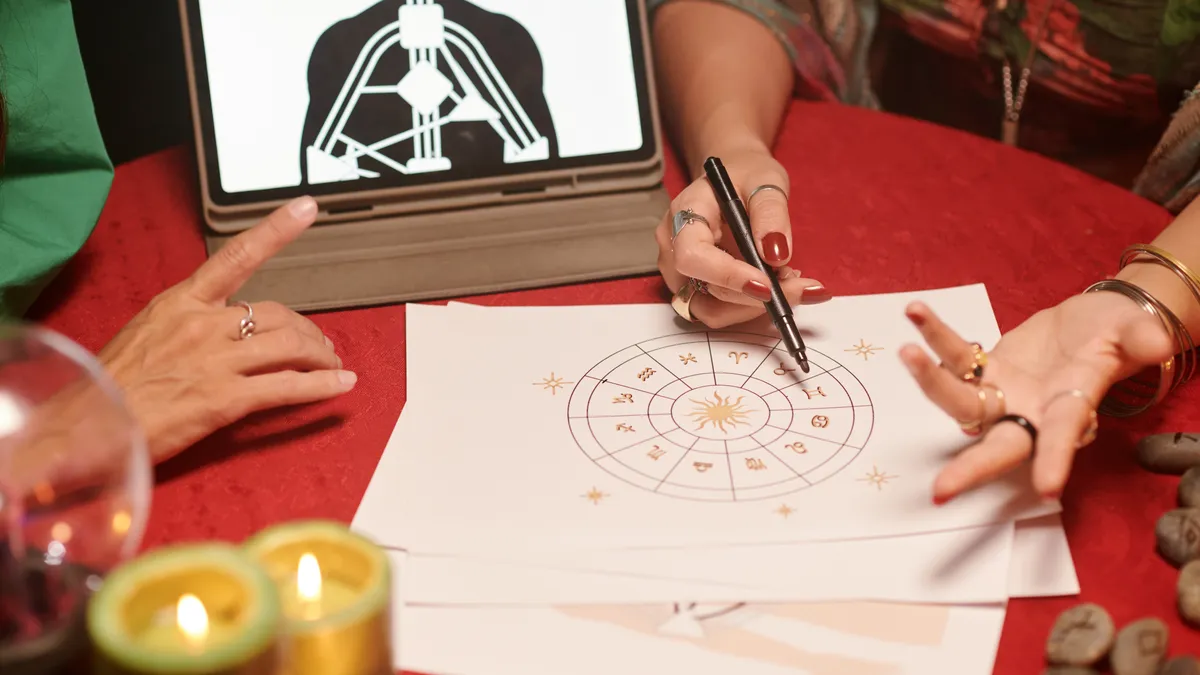
A birth chart analysis will not tell you whether to take the job, end the relationship, or move across the country. What it can do is show you the recurring instinct you bring into decisions like these, and whether that instinct has served you.
Timing-based astrology, like tracking Venus or Mars sign changes, can offer context for mood and friction, but it should never replace your own judgment. Below is a short table of relevant 2027 transits people commonly ask about when timing relationship or career decisions.
## Should I Get a Birth Chart Analysis Before a Big Decision?
A birth chart analysis will not tell you whether to take the job, end the relationship, or move across the country. What it can do is show you the recurring instinct you bring into decisions like these, and whether that instinct has served you.
Timing-based astrology, like tracking Venus or Mars sign changes, can offer context for mood and friction, but it should never replace your own judgment. Below is a short table of relevant 2027 transits people commonly ask about when timing relationship or career decisions.